
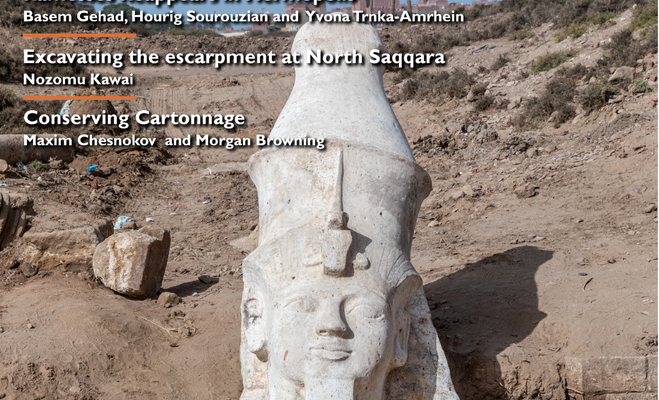
In 1930, German archaeologist Günther Roeder uncovered the lower half of a colossal seated statue of Ramesses II at the ancient city of Hermopolis in Middle Egypt. The find was unmistakably incomplete – its clean break and monumental scale made it clear that a missing upper portion had once crowned the massive legs and throne. For decades, scholars suspected that the statue’s torso and head still existed somewhere beneath the sands, though no one could determine whether it had been destroyed, repurposed, or simply lost to time.
Until an Egyptian-American archaeological team from the University of Colorado Boulder rediscovers the upper portion of a statue of Ramesses II in March of 2024 and first publishes their findings in an article titled Ramesses Reappears in Hermopolis.
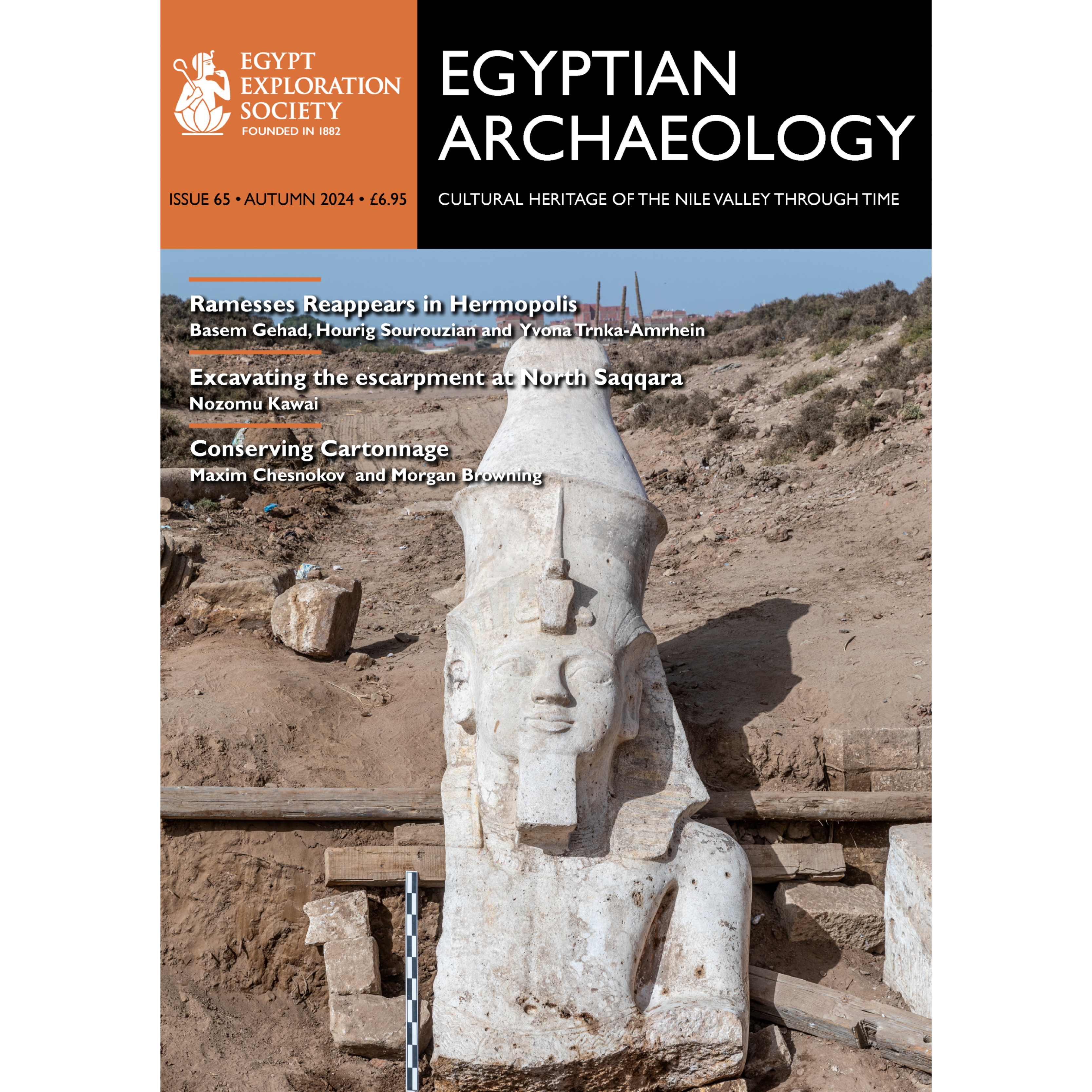
Cover of “Ramesses Reappears in Hermopolis,” Egyptian Archaeology #65 (autumn 2024), By Yvona K. Trnka-Amrhein, B. Gehad and H. Sourouzian.
Nearly a century later, the recent discovery of the long‑missing upper half has confirmed those long‑held suspicions and reunited the story of this 23‑foot monument.
In response to the breakthrough, Egyptian mission co‑leader Basem Gehad has formally submitted a proposal to reunite the two surviving pieces, a move that would restore one of the largest known representations of Ramesses II and bring new life to a masterpiece of ancient Egyptian sculpture.
Do you think the proposal will be accepted? Let us know in the comments below.